Wilder means untamed.
Blommetjies means little flowers.
A little flower is delicate, unfinished, still becoming what it is going to be, but it grows wild, reaching for light on its own terms. Put together, it is a picture of a child, and a picture of how we believe God grows one.
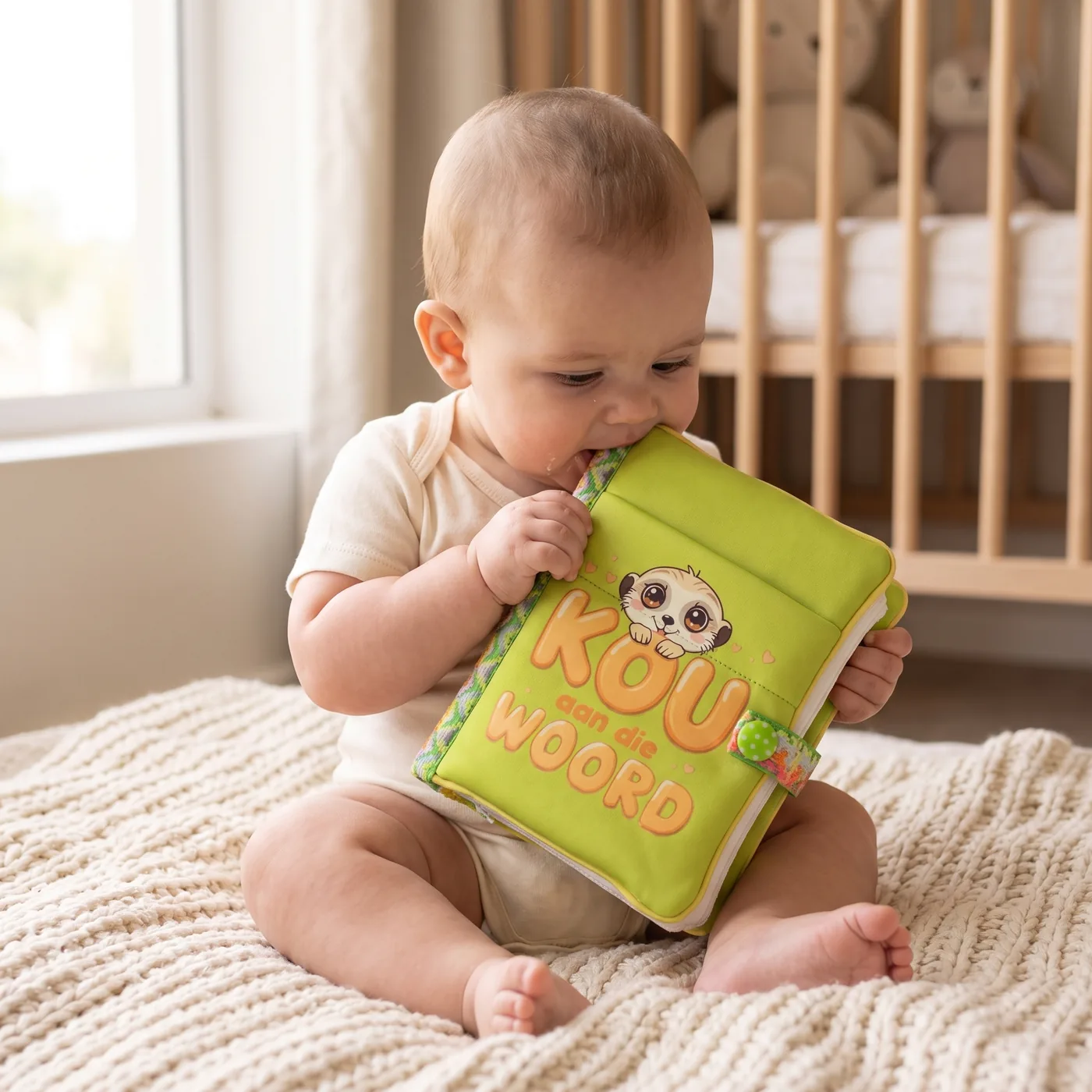
A book a baby could chew
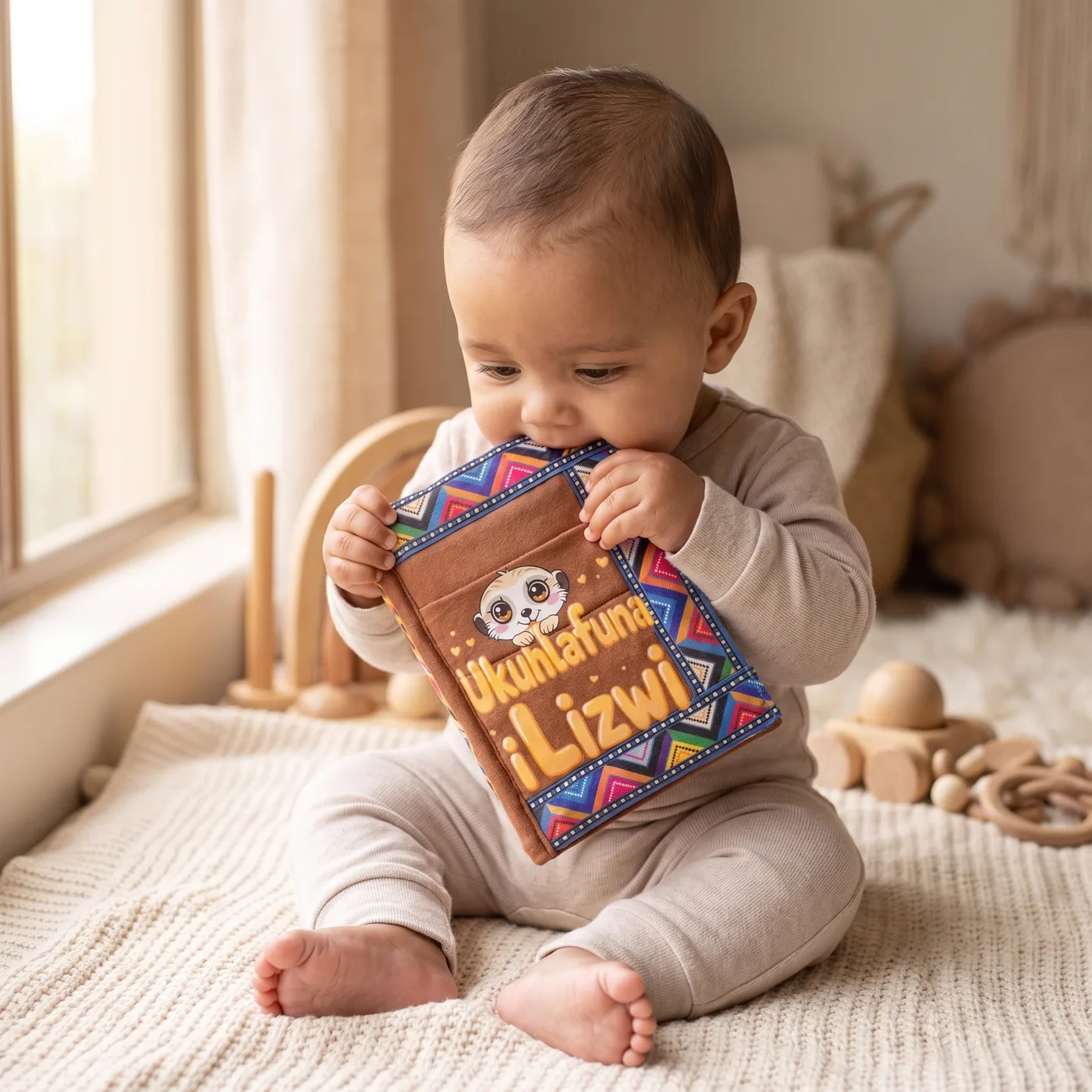
The first Baby Bible was made because there was nothing to buy. Board books are too hard for a newborn, cloth books are usually about animals, and nothing at all existed in the languages we wanted to hand a child in this country.
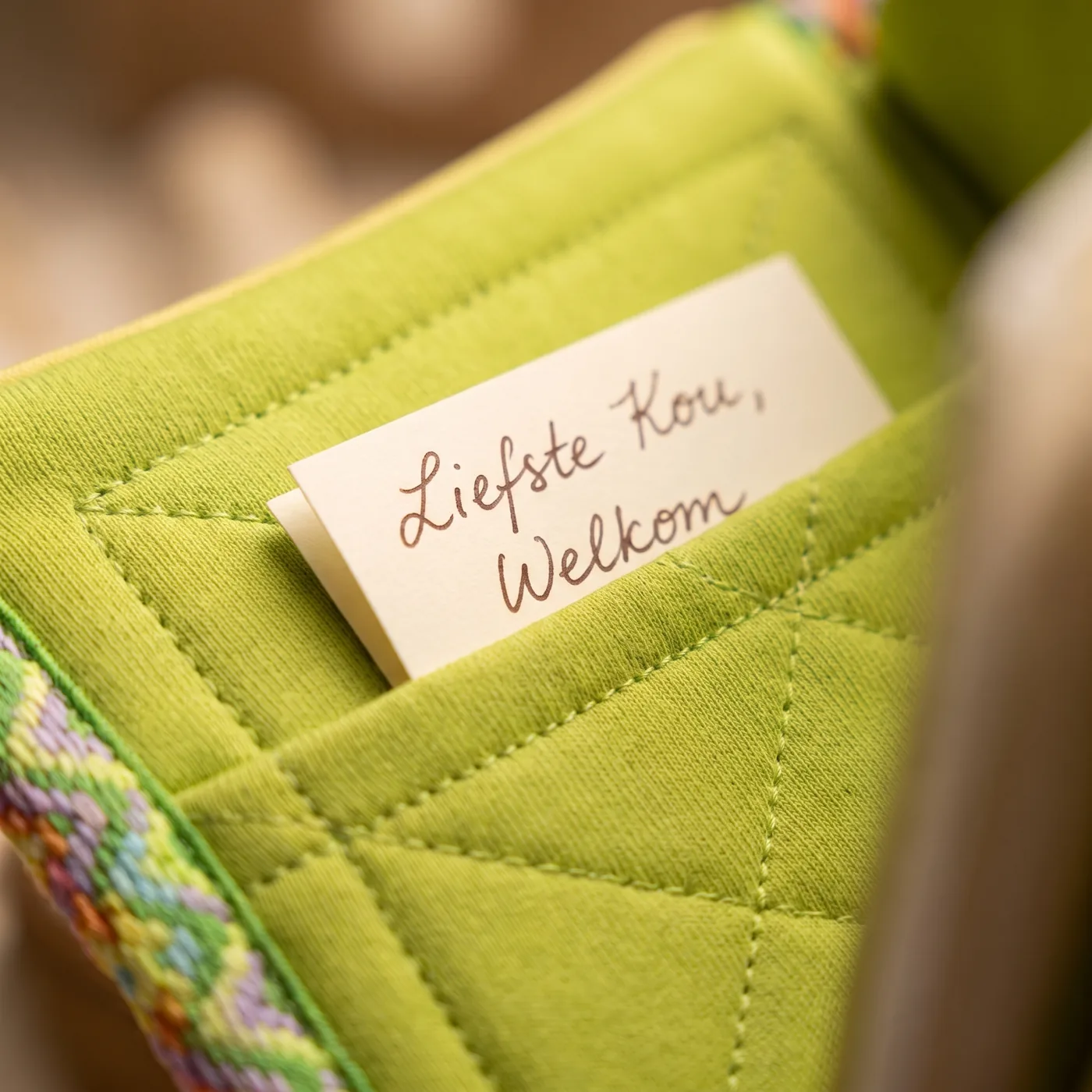
So we made one: soft enough to chew, sturdy enough to drag, with a pocket inside for the note a grandmother writes on the day of a christening. Everything since has come from the same question: what would we actually want to give a child we love, and a child God loves?
Faith, Love, Learn, Grow
We design and manufacture comfortable, skin-sensitive baby clothing and keepsakes, right here in South Africa. Every piece has to earn one of these four words, in real use, before it gets made.
From a shepherd's field to a fabric page
This is how a single verse becomes a product: not printed on for decoration, but built the design around from the very first sketch.
Chosen
“God het my mamma, pappa en my lief” opens the book because it is the first thing a child needs to know: they are loved, at home and by God. A first page has to be a page a parent can say without looking.
Set large and plain
One line per page, in a size a squinting newborn can focus on, stitched onto fabric soft enough to go straight into a mouth. The words are the point, so nothing else competes with them.
Held, not just read
The finished page turns up in the flipbook above, in the fabric bible on your shelf, and in a christening card tucked into the inside pocket. The verse outlives the box it shipped in.
Never a lesson on its own
A child does not sit still for a sermon, but they will sit with a friend. Each companion carries a small piece of what we believe, and shows up again at every stage that follows.
Chosen and tested by hand
Everything we make is designed around one question first: is this safe for a baby to chew, grip and sleep on? We are a small manufacturer, not a mass-line factory, which means every fabric is chosen and tested by hand before it becomes a product: held, stretched, washed and handed to a baby to see what they do with it. If it does not survive that, it does not get cut.
That makes us slower than a factory, and it makes every batch slightly different, which we have decided to be honest about rather than pretend otherwise. What it also means is that nothing leaves here that we have not personally held and prayed over.
What the pieces actually do
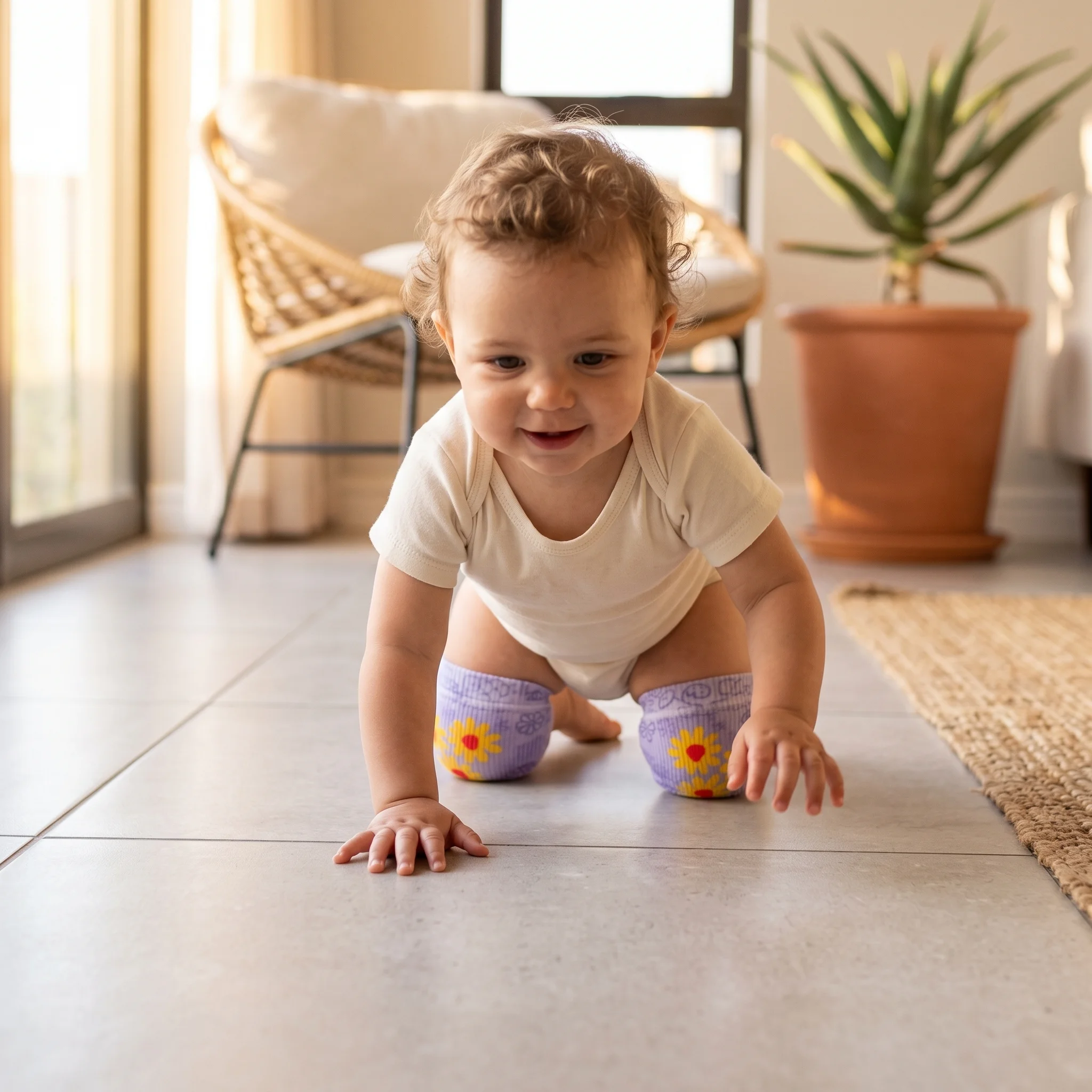
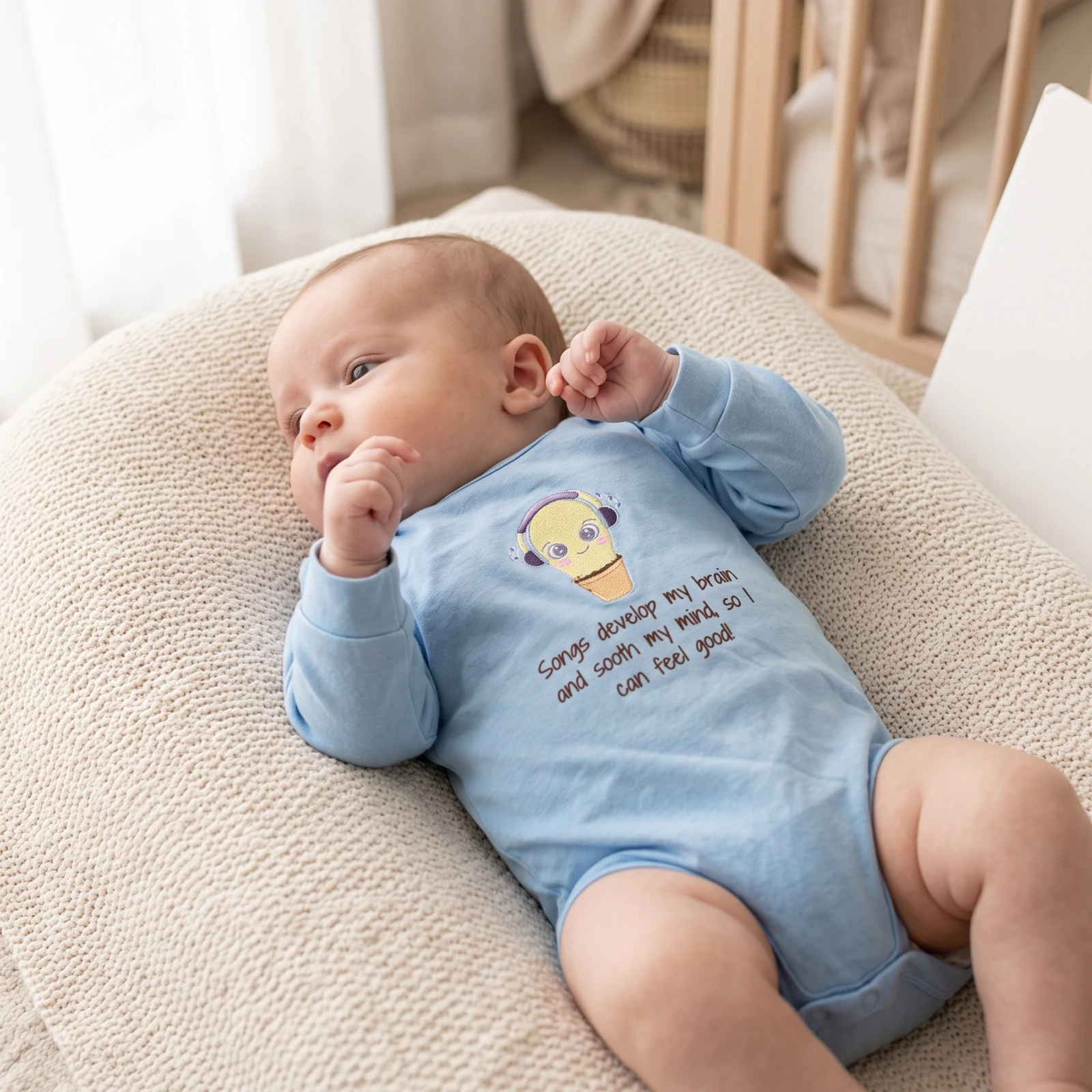
A conviction, not a decoration
Romans 10 says faith comes by hearing. We believe it also comes by handling. Long before a child can follow an argument for God's existence, or sit through a sermon, or even hold a conversation, they can hold a book. They can gum the corner of it at two months old and, without understanding a word of it, begin building an association between comfort, safety, their mother's voice, and the name of God. That is not a small thing. That is the ground faith gets planted in.
We are not trying to raise children who can recite scripture. We are trying to make it physically possible for scripture to be in the room during the years before a child can read it: in their hands during teething, on the floor during tummy time, in the cot during the two years a board book would already be a hazard. A faith formed only in words a child cannot yet access is a faith that waits. We would rather it started early, in fabric, badly understood and completely felt.
This is also why we have never made this a costume of faith. There is no verse printed just to look devotional on a product photo. Every scripture we use is one we chose because it says something true about how God treats a child: unhurried, unforced, held close and let loose to grow into who they were made to be. Wild means untamed. Blommetjies means little flowers. We are trying to make things that let a child be both, safely, from the very first page.
— The Wilderblommetjies workroom
A picture of a child, and a picture of grace
A little flower is delicate, unfinished, still becoming what it is going to be, but it grows wild, reaching for light on its own terms. That is every child we have ever met, and it is how we believe God grows each one: not forced, not rushed, held and let loose to become who they were made to be.
Meet the companionsFollow the making
New colourways and the pieces still on the table.